1997-2000 BMW 5 Series 2.8 Engine Bay Wiring Harness
Specifications
Position
Front
Donor year
1998
Body style
Sedan
Fuel
Gas
Engine size
2.8 L
Engine code
M52
Engine type
2.8L I6
Drivetrain
RWD
About this part
Also known as
Engine Wiring Harness
Motor Harness
Engine Bay Harness
Main Engine Wiring Loom
Underhood Wiring Harness
Engine Wire Assembly
Forward Body Harness
What this part does
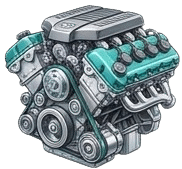
The engine bay wiring harness serves as the primary communications and power distribution network between the engine control module and the engine's vital electrical components. It routes securely around the engine block, intake manifold, and inner fender walls, terminating at various sensors, relays, and actuators. This assembly delivers necessary voltage, ground connections, and data pathways to the fuel injectors, ignition coils, camshaft position sensors, and other critical management systems.
Over time, constant exposure to extreme thermal cycles, engine vibration, and underhood fluids can cause the protective wire insulation to degrade or the plastic connector housings to become brittle and crack. When this electrical pathway is compromised, the vehicle typically experiences erratic engine performance, persistent misfires, short circuits that blow fuses, or a complete failure to start. These physical harness failures are almost always accompanied by multiple communication or sensor error codes when read by a diagnostic scanner.
Fits these vehicles
| Make | Model | Years | Engine |
|---|---|---|---|
| BMW | 528i | 1997-1998 | 2.8L I6 |
Before you order
Wiring harnesses for this specific chassis era vary significantly depending on the production month, engine generation, and whether the vehicle was equipped with an automatic or manual transmission. This harness is specific to the single VANOS engine architecture; vehicles built from late 1998 onward with the dual VANOS system utilize a completely different wiring layout and connector style.
It is highly recommended to visually compare the routing, the style of the main control module connectors, and the individual sensor plugs against the original unit being replaced. Matching these connections precisely to the vehicle it came from guarantees direct plug-and-play functionality without the need to splice wires. When installing, applying dielectric grease to the connector pins is advised to prevent future moisture intrusion and ensure solid electrical continuity.